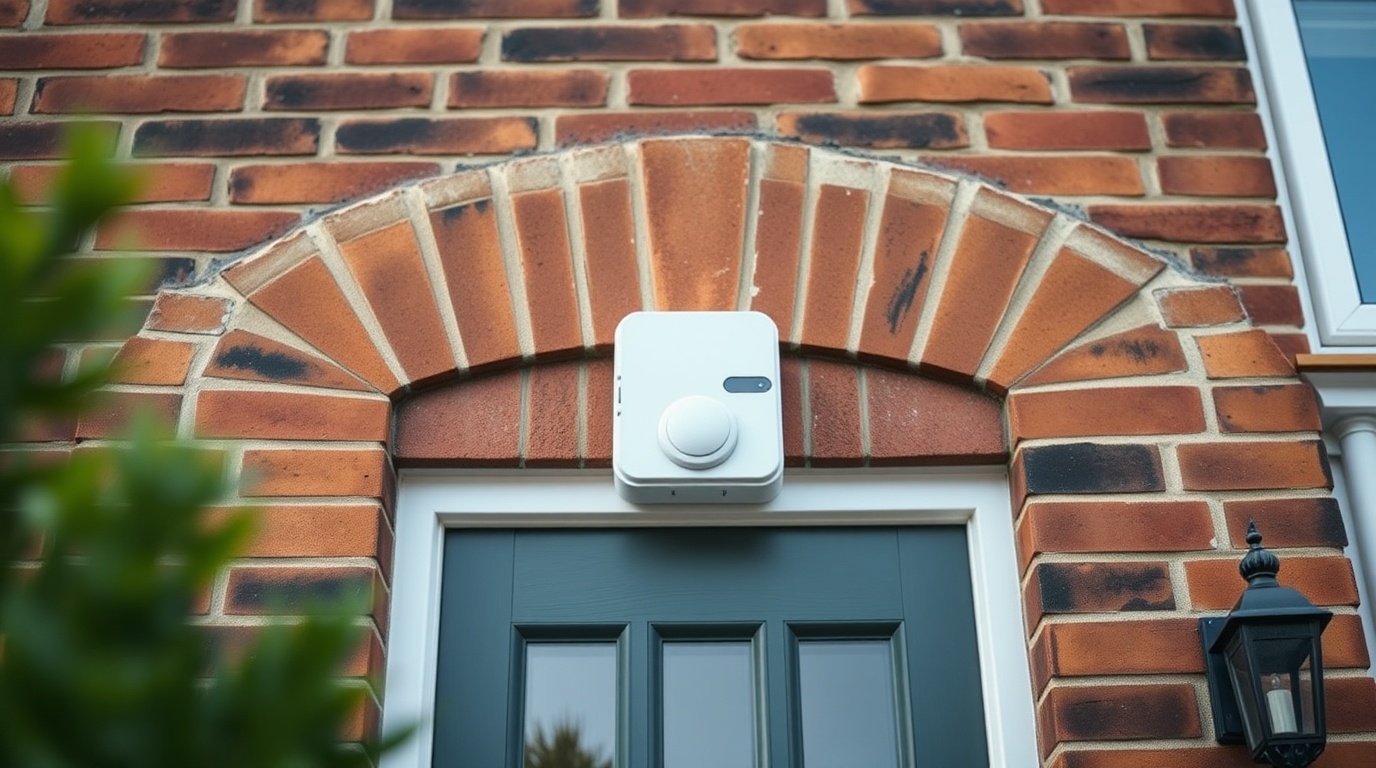
The short answer
A vibration (shock) sensor detects the impact and vibration of someone trying to force a door, window or wall, so it can raise the alarm during the attempt rather than after entry. It is fixed to the protected surface and contains a sensitive element that reacts to the knocks, drilling or levering of a forced entry. Unlike a magnetic contact (which triggers only once a door or window is opened) or a motion sensor (which triggers once the intruder is inside), a shock sensor catches the attack at the perimeter, giving the earliest possible warning. They suit vulnerable glass, doors, shutters, safes and walls, and are common in higher-grade and commercial systems. Sensitivity must be tuned to avoid false alarms from ordinary knocks, traffic or weather, which is why proper setup matters.
Vibration sensors add 'perimeter' detection that fires before an intruder is inside. The sections below explain how they work, how they differ from other sensors, and when they are worth fitting.
Vibration/shock sensors
- DetectsImpact/vibration of forced entry
- When it triggersDuring the attack, before entry
- Mounted onDoors, windows, walls, safes, shutters
- Versus contact sensorEarlier (before opening)
- Key setup issueTuning sensitivity vs false alarms
How a vibration sensor works
A vibration or shock sensor is fixed directly to the surface it protects — a door leaf, window frame, glass pane, shutter, wall or safe. Inside is a sensitive mechanical or electronic element that responds to the vibrations and impacts produced when someone tries to force entry: hammering, levering with a tool, drilling, or smashing glass. When the vibration exceeds a set threshold, the sensor signals the control panel and the alarm triggers.
The defining feature is when it fires. A shock sensor reacts to the attempt to break in, so it can raise the alarm while the intruder is still working on the door, window or wall from outside — before they are through. That early warning can disrupt the attack at its most vulnerable stage and is why shock sensors are valued for perimeter protection, especially on weak points like large panes of glass or vulnerable doors.
How it differs from other sensors
Vibration sensors complement rather than replace the common detectors. A magnetic contact (reed switch) triggers only when a door or window is actually opened — useful, but it gives no warning during a forced attack and misses an entry made by breaking glass without opening the frame. A PIR motion sensor triggers once an intruder is moving inside the protected space — later still. A shock sensor sits ahead of both in the sequence, catching the attempt at the perimeter.
Because of this, layered systems often combine them: shock sensors on vulnerable glass and doors for the earliest warning, contacts to confirm an opening, and PIRs to catch movement inside. Each covers a different stage of a break-in. The table shows where vibration detection fits in the timeline.
| Sensor | Triggers when | Stage caught |
|---|---|---|
| Vibration / shock | Door/window/wall is attacked | During forced entry |
| Magnetic contact | Door/window is opened | At the moment of entry |
| PIR motion | Intruder moves inside | After entry |
| Glass-break (acoustic) | Glass actually breaks | At point of breakage |
Where vibration detection fits in the break-in sequence compared with other sensors.
Do you need one?
You do not need vibration sensors everywhere, but they earn their place on specific vulnerable points: large or accessible windows and patio doors, glazed doors, ground-floor and basement openings, shutters and roller doors, and high-value items like safes. They are common in higher-grade and commercial installations precisely because they add early, perimeter-stage detection where the risk of forced entry is greatest. For an ordinary home, contacts and motion sensors cover the basics; shock sensors are a worthwhile upgrade where there are obvious weak points an intruder would attack.
The main caveat is false alarms. Because the sensor reacts to vibration, ordinary knocks, slamming doors, heavy traffic, building work or severe weather can trigger it if the sensitivity is set too high. Good sensors allow the threshold and 'pulse count' to be tuned, and a competent installer adjusts them to the location so genuine attacks trigger while everyday vibration does not. Set up correctly, a vibration sensor adds valuable early warning; set up carelessly, it becomes a nuisance — which is why placement and tuning, not just fitting one, determine whether it is worth it.
Tuning sensitivity and layering shock detection in a graded system
Getting a shock sensor right is mostly about sensitivity and discrimination, not just where it is mounted. Better detectors process the signal in two ways: a gross-attack level that fires immediately on a heavy blow such as a sledgehammer or crowbar, and a pulse-count level that counts smaller repeated impacts (the tap-tap-tap of drilling or chiselling) within a time window and triggers only when enough accumulate. This lets the sensor ignore a single stray knock while still catching the sustained, lower-energy attack a careful intruder uses. The threshold and pulse count are set to the surface and its environment — a solid hardwood door, a single-glazed sash window and a thin partition wall all transmit vibration differently, and a sensor on a noisy roadside elevation needs a higher floor than one on a quiet rear garden. After fitting, the sensor is tested by tapping the protected surface at the edges of its coverage to confirm it responds to a real attack but not to everyday use, and re-tuned if it nuisance-triggers.
In a graded system, shock sensors usually work as one layer of a perimeter rather than alone. A typical higher-grade arrangement pairs them with magnetic contacts on the same doors and windows (so an opening is confirmed as well as an attack detected) and interior PIRs behind them, so the system sees the break-in at the structure, at the opening and then as movement inside — three chances to catch it, in sequence. This layering also supports confirmation: a monitored, graded system that needs two independent activations before treating an event as a confirmed alarm benefits from having shock, contact and motion detection on the same approach, because a genuine forced entry naturally trips more than one. Used this way, vibration detection is not a gimmick bolted onto a basic kit but the outermost layer of a properly designed perimeter, which is why it features most in the higher EN 50131 grades and in commercial installations where forced entry is the realistic threat.
Frequently asked questions
What is the difference between a vibration sensor and a glass-break sensor?
A vibration (shock) sensor detects the impact and vibration of any forced attack on a surface — door, window frame, wall or safe — and fires during the attempt. A glass-break sensor specifically detects the sound or shock of glass actually shattering. They overlap on glazing but a shock sensor covers a wider range of forced-entry attacks.
Will a vibration sensor cause false alarms?
It can if the sensitivity is set too high, because it reacts to vibration — slamming doors, heavy traffic, building work or storms may trigger it. Quality sensors let the threshold and pulse count be tuned to the location, so a competent setup catches genuine attacks while ignoring everyday vibration.
Are vibration sensors worth it for a normal home?
They are a worthwhile upgrade on specific weak points — large or accessible windows, patio and glazed doors, basements, shutters and safes — where forced entry is most likely. For everyday protection, contacts and motion sensors cover the basics; shock sensors add earlier, perimeter-stage warning where it counts.
Sources & further reading
- BSIA — intruder detection technologies and EN 50131
- Secured by Design — physical and electronic security guidance
Figures on this page are typical UK ranges drawn from published sources and depend on your specific property and system. They are guidance, not a quotation.