The short answer
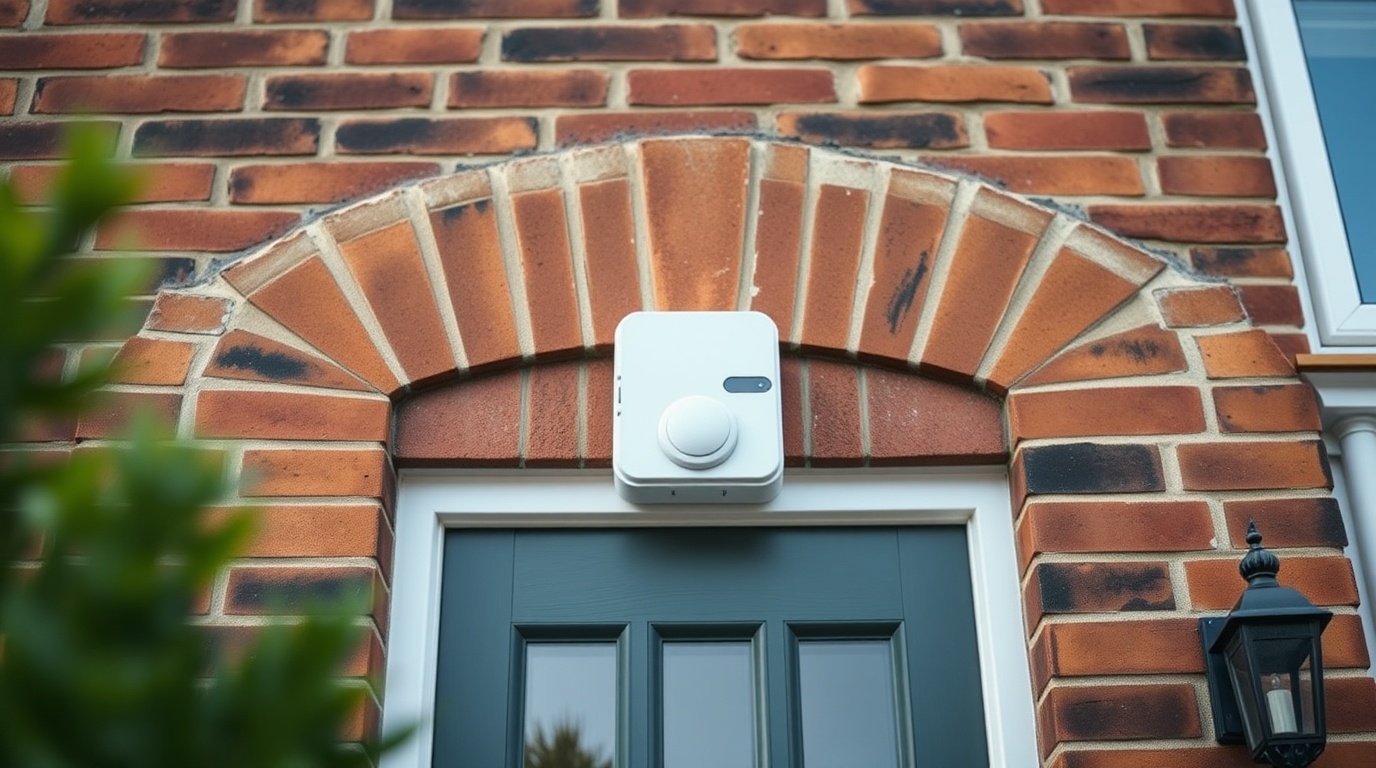
Usually not, but there are exceptions. For most houses, fitting an external alarm bell box does not require planning permission, provided it meets sensible siting conditions — broadly that it is positioned below the highest part of the roof and not on a wall facing a road if it would be near the top of the building. The picture changes for a listed building, where listed building consent is likely needed for any external fixture, and within a conservation area or on a flat, where additional restrictions can apply. There are also rules limiting how far an alarm box can project from the wall. The straightforward way to be certain is to check your local planning authority's requirements before fixing the box, especially for a listed or protected property.
An alarm bell box is a small fixture, and for ordinary homes the rules are light. They tighten considerably for listed buildings and protected areas.
Planning and an alarm bell box
- Typical houseUsually no permission needed
- SitingBelow highest part of roof
- Listed buildingListed building consent likely
- Conservation areaExtra restrictions possible
- Check withLocal planning authority
The general position for a typical home
For most houses, an alarm bell box is treated as a minor external fixture that does not need a planning application. Permitted development rules generally allow an alarm box without consent, subject to conditions designed to keep it unobtrusive. The usual conditions are that the box should be sited below the highest part of the roof, and that there are limits on placing a prominent box high up on a wall facing a highway. There can also be a limit on how far the box projects from the surface of the wall.
These conditions exist so an alarm box does not become a visually intrusive feature, while still allowing it to do its job as a visible deterrent. In practice, a normally sited box on the front or side of a house, fitted at a sensible height, will comply without any formal permission. The exact figures and wording can change, so a quick check against current rules is worthwhile if your siting is unusual.
Listed buildings and protected areas
The position is very different for protected properties. If your home is a listed building, almost any alteration to its character — including fixing an external alarm box to the wall — is likely to need listed building consent. Carrying out works to a listed building without the required consent is a serious matter and can be a criminal offence, so this is the situation where checking first is essential.
- Listed buildings: listed building consent is likely required for an external alarm box; discuss siting with the conservation officer.
- Conservation areas: additional controls may apply, and a discreet location or finish may be expected.
- Flats and maisonettes: permitted development rights are more limited than for houses, so consent may be needed.
- Leasehold properties: beyond planning, the lease may require the freeholder's consent to fix anything to the external walls.
For any of these, the local planning authority is the definitive source. A conservation officer can often advise on a siting and design that protects the building's appearance while still providing the deterrent the alarm is there to give.
| Property type | Likely planning position |
|---|---|
| Standard house | Usually permitted, subject to siting |
| Listed building | Listed building consent likely needed |
| Conservation area | Possible extra restrictions |
| Flat / maisonette | Consent may be needed |
| Leasehold | Check the lease as well as planning |
Indicative guide only. Permitted development rights and local rules vary; confirm with your local planning authority.
Practical siting and the dummy-box point
Even where no permission is needed, sensible siting matters. A bell box is most effective as a deterrent when it is clearly visible from the approach to the property, yet it should be placed where it is hard to reach and tamper with, and where it complies with any height and projection limits. A professional installer will normally choose a location that balances visibility, security and the planning conditions.
A separate point worth noting: some homeowners fit a dummy bell box as a cheap deterrent without an alarm behind it. A dummy box is subject to the same general siting considerations, but it provides no actual protection and earns no insurance credit. If your aim is genuine security or to satisfy an insurer, a working, maintained system is what counts; a dummy box is only ever a visual bluff.
How to be certain for your property
Because planning rules differ between England, Wales, Scotland and Northern Ireland — and because permitted development rights vary with property type — the reliable way to confirm your position is to contact your local planning authority before fitting the box. They can tell you whether your alarm box falls within permitted development, whether listed building consent or conservation area controls apply, and any siting conditions specific to your area.
If you are using a professional alarm company, ask them to site the box compliantly and flag any planning sensitivity, particularly for an older or protected building. For a leasehold flat, also check your lease and seek the freeholder's consent where the external wall is involved. Taking these steps in advance avoids the awkward and potentially costly situation of having to remove or reposition a box after it has been fitted.
It also helps to separate the planning question from the insurance one, because they are easy to conflate. Planning rules govern whether you may fix the box to the outside of the building; they say nothing about whether the alarm behind it satisfies your insurer. A box can be perfectly compliant with permitted development and still earn no insurance credit if the system is self-installed rather than fitted by an approved company. Equally, an insurer's requirement for an approved alarm does not override planning controls on a listed building. For a protected property in particular, the sensible order is to confirm the planning and listed-building position first, then arrange an approved installation that works within whatever siting the conservation officer will accept, so the alarm meets both the planning rules and any insurance condition at once.
Frequently asked questions
Does a normal house need planning permission for an alarm box?
Usually not. An external alarm bell box is generally permitted without a planning application, provided it is sited sensibly — typically below the highest part of the roof and within any projection limits. Check current rules if your siting is unusual.
What about a listed building?
Listed building consent is likely needed for any external alarm box, because it alters the building's character. Carrying out works without the required consent can be an offence, so contact your local planning authority's conservation officer first.
Do conservation areas have different rules?
They can. Conservation areas may carry additional controls, and a discreet location or finish may be expected. Flats also have more limited permitted development rights than houses. Confirm the position with your local planning authority.
Sources & further reading
- GOV.UK — planning permission and permitted development
- Planning Portal — alarms and external fixtures (England & Wales)
- Historic England — listed buildings and consent
Figures on this page are typical UK ranges drawn from published sources and depend on your specific property and system. They are guidance, not a quotation.