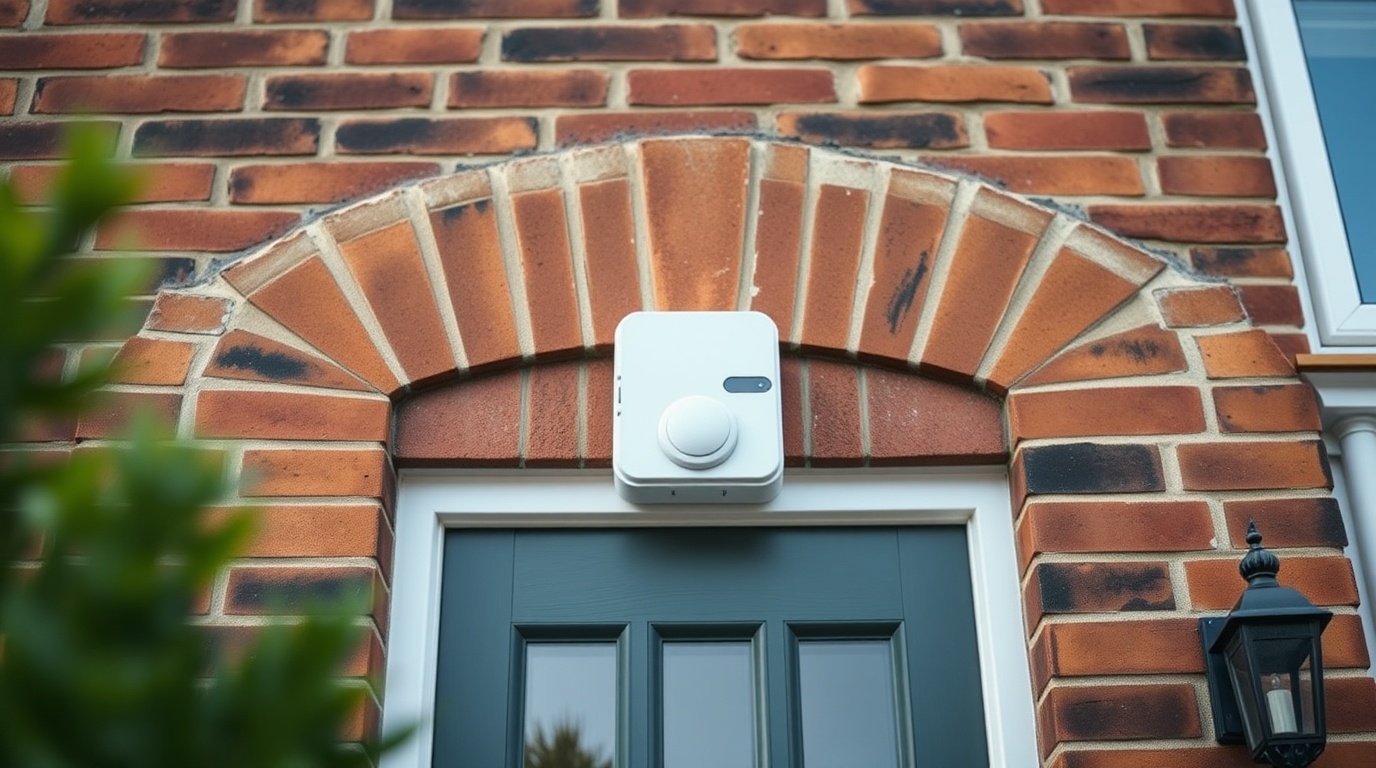
The short answer
Servicing a burglar alarm in the UK typically costs £60–£150 per visit, with an annual service often the norm for monitored or graded systems. A one-off repair — replacing a faulty PIR, a failed door contact, a flat backup battery or a bell box — usually runs £60–£200+ depending on the part and labour. Many monitored alarms include servicing within an annual maintenance contract, which is often a condition of keeping a police Unique Reference Number (URN) and of insurance cover. Common faults are flat batteries, faulty sensors and false-alarm-prone PIRs. These are typical UK ranges for guidance, not quotations.
Alarms need occasional attention, and for monitored systems regular servicing is usually mandatory. The figures below are typical UK ranges for guidance, not quotations.
Typical service and repair costs
- Annual service~£60–£150 per visit
- Sensor / contact repair~£60–£150
- Backup battery replacement~£40–£90
- Bell box replacement~£100–£200+
- Maintenance contractoften required for monitored / URN
What a service includes and costs
A routine alarm service is a defined check of the whole system, which is why it prices fairly predictably. The engineer walk-tests every PIR and door contact, checks the control panel, tests the backup battery, confirms the external and internal sounders work, and on a monitored system verifies that the panel still signals the alarm receiving centre correctly. They also review the entry and exit timings and any settings that commonly cause false alarms. For graded systems this maintenance is required to keep the install compliant with its standard.
The cost reflects whether servicing is a one-off or part of a contract. A standalone annual service typically falls in the £60–£150 range per visit. Where the alarm is monitored, the service is usually bundled into an annual maintenance contract that also covers the monitoring connection and a certain number of call-outs. For systems holding a police URN, regular maintenance by an approved company is generally a condition of keeping that response, so the service is not optional — it is part of what makes police response possible.
The service visit is also where a system's compliance is re-established. For graded alarms, the engineer records that the system continues to meet its standard, updates the service log, and confirms the signalling path to the ARC is healthy. On a system holding a police URN this paperwork is not incidental — it is part of the evidence that the alarm is maintained, which underpins the police response. A lapsed or skipped service is therefore not just a reliability risk but a compliance one, which is why monitored systems are sold with maintenance built in rather than left to the owner to arrange ad hoc.
Most repair bills come down to a call-out fee plus parts and labour. The call-out covers the engineer's time to attend and diagnose, often £60–£100 in the first hour, with further time charged thereafter; parts are extra. Common faults are inexpensive in themselves — a flat backup battery, a sensor knocked out of alignment, a tamper switch tripped — but the diagnostic visit is the floor cost. Where a system is under an annual maintenance contract, many of these visits are already included, which is one of the practical reasons a service plan often pays for itself.
| Job | Typical cost | Notes |
|---|---|---|
| Annual service | ~£60–£150 | full system check and test |
| Replace faulty PIR | ~£60–£150 | device plus labour |
| Backup battery | ~£40–£90 | panel or bell box battery |
| Bell box replacement | ~£100–£200+ | external sounder and strobe |
Indicative UK figures for guidance. Sources: Checkatrade and MyJobQuote cost guides.
Common faults and what they cost to fix
Most alarm faults fall into a few familiar categories. The most common is a flat or failing battery — either a wireless sensor's cell or the panel's backup battery — which the system usually flags before it fails. Replacing a battery is a low-cost job, especially if rolled into a service. Next are faulty sensors: a PIR that stops detecting, triggers falsely, or reports a fault, or a door contact knocked out of alignment. These are individually inexpensive to swap, with the cost being the device plus a short labour charge.
Larger faults cost more. A failed external bell box, which also houses a tamper switch and strobe, is a bigger item to replace and involves working at height. Control panel faults are less common but more significant, sometimes meaning a panel replacement. Signalling faults on a monitored system — where the panel stops reporting to the ARC over its broadband or GSM path — need attention promptly, because a system that cannot signal cannot deliver monitoring or police response. The annual service exists partly to catch these issues before they become a problem.
The age and type of system shape what a repair costs and whether it is worth doing. A modern panel with available spares is straightforward; an obsolete panel whose parts are discontinued may force a part-replacement that approaches the cost of a new system, at which point upgrading is the more sensible spend. Wireless systems add the routine of battery replacement across detectors, while wired faults can mean tracing a cable run. An honest engineer will tell you when a repair is uneconomic and a replacement is the better value, rather than patching a system at the end of its life.
Why maintenance is not optional for monitored systems
For a bell-only alarm, servicing is sensible but discretionary — you can run it for years and only call an engineer when something fails. For a monitored or police-responding system, regular maintenance is effectively mandatory. The reason is that the value of monitoring depends on the system reliably signalling the alarm receiving centre and not generating false activations, and that reliability has to be verified. An unmaintained monitored system that drifts into false alarms or signalling faults undermines the whole point of paying for the service.
There is also a compliance dimension. A police URN is issued on the basis that the alarm is installed and maintained to a recognised standard by an approved company, and forces apply a false-alarm policy that can withdraw response if too many unconfirmed activations occur. Keeping the maintenance contract current is part of holding the URN. Insurers who require a graded alarm typically also require it to be maintained, so a lapsed service can affect cover. In short, for anything beyond a basic bell-only system, the annual maintenance cost is part of the cost of monitoring itself, not an extra.
Costs also depend on whether a fault is covered by a maintenance contract or charged as a one-off. Within an annual maintenance agreement, routine servicing and sometimes a set number of call-outs are included, so a failed sensor or flat battery is dealt with at little or no extra cost. Outside a contract, the same fault is billed as a call-out plus parts and labour, which is why a recurring maintenance fee can work out cheaper over time for a system that needs occasional attention. Weighing the contract against pay-as-you-go repair is part of understanding the true running cost of a monitored or graded alarm.
For a monitored, police-responding system, repairs carry an extra dimension: keeping the install compliant. The URN depends on the system being maintained to standard by an approved company, so an unfixed fault or a lapsed service can put police response at risk as much as the fault itself. A signalling failure, in particular, means the ARC can no longer see activations — a monitored alarm that cannot signal is effectively unmonitored until repaired. This is why prompt repair on a monitored system is not just about restoring function but about protecting the response the subscription pays for.
Frequently asked questions
How often should a burglar alarm be serviced?
A monitored or graded alarm is typically serviced annually, and for police-responding systems regular maintenance by an approved company is usually a condition of keeping the URN. A bell-only alarm can be serviced less often, but an annual check is still sensible.
Why does my alarm keep going off or beeping?
Persistent beeping is often a low-battery warning on a sensor or the panel's backup battery. Repeated false alarms are usually a sensor-placement or settings issue an engineer can correct, rather than a major fault. Either is worth resolving promptly, especially on a monitored system.
Is alarm maintenance required for insurance or police response?
Often yes. Insurers who require a graded alarm usually require it to be maintained, and a police URN is granted on the basis of an installed and maintained system from an approved company. A lapsed maintenance contract can affect both cover and police response.
Sources & further reading
Figures on this page are typical UK ranges drawn from published sources and depend on your specific property and system. They are guidance, not a quotation.