The short answer
A burglar alarm for a typical UK three-bedroom house usually costs around £500–£900 fitted for a good bell-only system, rising to £800–£1,300+ for a monitored Grade 2 setup. A 3-bed commonly needs a control panel, a keypad, three to five PIR motion sensors, two or three door/window contacts and an external bell box — enough to cover the entrance, hallway, landing and main living areas. Wireless systems fit faster in a finished home; wired can suit a renovation. Adding monitoring via an alarm receiving centre brings signalling hardware and a recurring subscription. These are typical UK ranges for guidance, not quotations.
A three-bedroom house is a common reference point, so it is a useful way to picture what an alarm actually involves. The figures below are typical UK ranges for guidance, not quotations.
Typical 3-bed alarm setup
- PIR sensors~3–5
- Door / window contacts~2–3
- Bell-only fitted~£500–£900
- Monitored Grade 2~£800–£1,300+
- Includespanel, keypad, sensors, bell box
What a 3-bed house typically needs
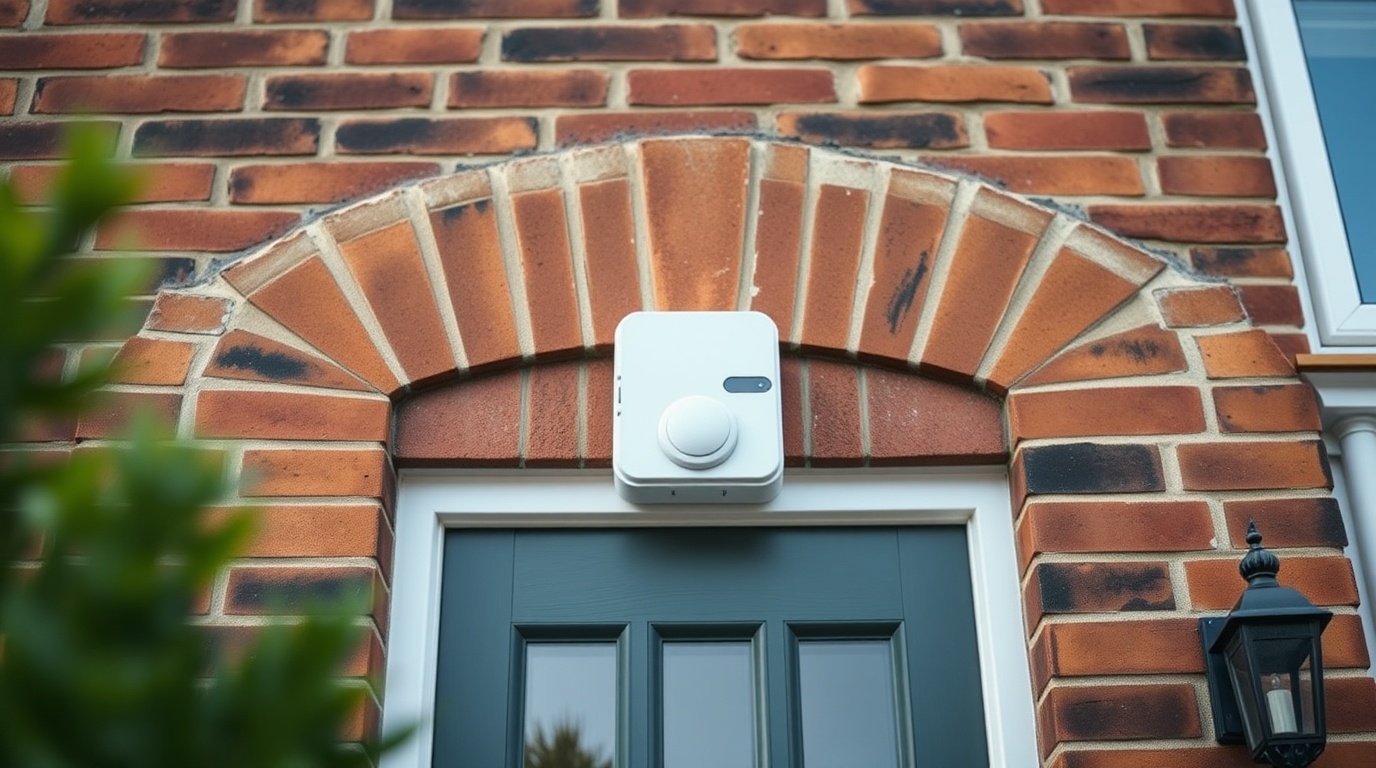
A standard three-bedroom house has a fairly predictable set of vulnerable points, which is why alarm specs for it cluster around a common shape. Most installs include a control panel and a keypad near the main entrance, PIR motion sensors covering the hallway, landing and main living areas (commonly three to five), and magnetic contacts on the front and back doors and sometimes a vulnerable window. An external bell box with a strobe is mounted high on the front elevation, with an internal sounder inside. This coverage catches movement on the likely routes through the house and registers forced entry at the doors.
The exact count varies with layout. A 3-bed with a through-lounge, a separate dining room and a converted loft needs more PIRs than a compact terrace; a detached house with a side gate, garage or conservatory needs extra contacts and possibly an external detector. Homes with pets use pet-tolerant PIRs to avoid false alarms from animals, which cost slightly more. Each added sensor brings both a device cost and the time to fit and program it, which is why two 3-bed quotes can differ — they may assume different coverage.
How a three-bedroom house is laid out across floors matters for the specification. A typical 3-bed has entry points on the ground floor and bedrooms above, so the standard approach protects the routes an intruder must use: contacts on the external doors, a PIR covering the hallway an intruder would cross, and PIRs on the landing and in the main reception rooms. Upstairs windows are sometimes left without contacts where access is difficult, with the landing PIR catching any movement instead. This logic of protecting routes rather than every opening keeps the sensor count — and therefore the cost — proportionate while still detecting a genuine intrusion.
A typical three-bed semi falls in a predictable band because its sensor needs are fairly standard. A common specification is a panel and keypad, three to five PIRs (hall, landing and main downstairs rooms), door contacts on the front and back doors, and an external bell box with an internal sounder. That covers the usual entry points and movement paths without over-sensoring. From there the figure moves with grade, wired versus wireless, and whether you add monitoring — but the core hardware list for a three-bed is consistent enough to quote with confidence.
| Component | Typical for a 3-bed | Notes |
|---|---|---|
| Control panel + keypad | 1 | near main entrance |
| PIR motion sensors | 3–5 | hall, landing, living areas |
| Door / window contacts | 2–3 | front, back, vulnerable window |
| External bell box | 1 | high on front elevation |
| Internal sounder | 1 | audible inside |
Indicative setup and figures for guidance. Sources: Checkatrade and Which? home alarm guides.
Wired, wireless and what they cost
For a finished 3-bed home, the practical choice is usually wireless. Battery-powered sensors pair to the panel by radio, so there is little cabling to chase through walls and floors, the install is faster and tidier, and disruption is minimal. This keeps the labour element down. The trade-off is periodic battery replacement across the sensors, which is a modest ongoing cost. For most existing three-bedroom houses, wireless is the sensible default.
A wired system can still make sense in a 3-bed undergoing renovation or in a new-build, where cable can be run before walls are closed up — neat, mains-powered and with no sensor batteries to replace. In a finished home, though, retrofitting wired cabling adds labour and making-good, raising the install cost above the wireless equivalent. So for a 3-bed the decision tends to follow the property's state: wireless for a finished home, wired where the structure is open or being worked on.
Layout details push the price within the band. A through-lounge and a single staircase are simple; a converted loft, a downstairs extension or a detached garage each add a detector and a little labour. Choosing wireless trims installation time in an occupied, finished home but adds per-sensor hardware and battery upkeep, while wired can be cheaper overall if walls are already open. Pet-tolerant PIRs for a household with a dog or cat are a small uplift worth specifying, since they prevent the false alarms that a standard sensor would generate.
Bell-only versus monitored for a 3-bed
Whether a three-bedroom house needs monitoring comes down to how often it is empty and what is inside. A bell-only system covers the house with sirens and a visible bell box, deterring opportunists and alerting anyone nearby, with no monitoring subscription. For a 3-bed that is usually occupied in a lower-risk area, this is often a proportionate, lower-cost choice — real deterrent value without an ongoing bill.
A monitored system adds dual-path signalling (broadband plus mobile/GSM) reporting to a 24-hour alarm receiving centre, which follows an agreed escalation to keyholders and, for confirmed activations with a URN, requests police response. This suits a 3-bed that is regularly empty during the day, holds valuable contents, or where an insurer requires it. The extra cost — both the higher install and the subscription — buys a system that acts when no one is home to hear the bell. Matching the system to how the house is actually used keeps the spend proportionate.
A monitored 3-bed system is also where confirmed-activation signalling earns its place. With several PIRs across the hall, landing and living areas, the panel can be set so that two independent detectors triggering in sequence produces a confirmed alarm, which is what allows the ARC to request police response on a URN. A smaller flat with one or two sensors struggles to confirm in this way, but a 3-bed's natural spread of detectors lends itself to it. This is part of why the step up to monitoring suits a family house: the layout already supports the confirmation logic that police response depends on.
The biggest cost decision for a three-bed is usually bell-only versus monitored. A bell-only system for a three-bed is a one-off spend with no monthly fee and suits a usually-occupied home in a lower-risk area. Monitoring adds a subscription (~£10–£35/month) and, for police response, the need for an approved, maintained, graded install with a URN — worth it for a home left empty during long working days or holding valuable contents. Deciding which tier fits your absence patterns and risk is what determines the true lifetime cost for your house, not just the install price.
Frequently asked questions
How many sensors does a 3-bed house need?
A typical three-bedroom house uses around three to five PIR motion sensors covering the hall, landing and main living areas, plus two or three door and window contacts. The exact number depends on the layout, extensions, pets and any outbuildings.
How much does a monitored alarm cost for a 3-bed house?
A monitored Grade 2 system for a three-bedroom house typically costs around £800–£1,300 or more to install, plus a recurring subscription to an alarm receiving centre. A bell-only system for the same house is usually £500–£900 with no ongoing monitoring fee.
Is wired or wireless better for a 3-bed?
For a finished three-bedroom home, wireless is usually the better choice because it fits faster with minimal disruption. Wired suits a renovation or new-build where cable can be run before walls are closed up, and avoids the periodic battery replacement wireless sensors need.
Sources & further reading
Figures on this page are typical UK ranges drawn from published sources and depend on your specific property and system. They are guidance, not a quotation.